By Amy Boyle
This International Firefighters’ Day at MNG we are honouring the dedication and bravery of fire service workers around the world, whilst raising awareness of the growing fire service mental health crisis.
Whilst the number of domestic house fires in the UK has decreased by almost half over the last 20 years, the threat of wildfires is increasing, with global warming and climate change altering the landscape and posing a larger threat each year. In 2025 alone, Spain had its worst wildfire season in a decade, South Korea faced its deadliest and most intense wildfires in history, Canada experienced widespread wildfires which affected air quality across the US, and in the UK, we faced significant fires with a notable wildfire on Marsden Moor which covered 12,000 acres of land.
As a result of these changes, the role of a firefighter has shifted, with fire services now pushed to their limits both physically and mentally. As the number of wildfires increases internationally each year, we are confronted with the realisation that ‘every season is now wildfire season’ (Gallagher Re), resulting in an ever-increasing pressure on fire services to meet the demands of a world on fire.
A 2019 survey conducted by Mind revealed that 60% of fire service workers reported experiencing mental health problems, with 39% experiencing depression and anxiety and 18% experiencing PTSD. With global warming on the rise and the threat of natural wildfires increasing on a yearly basis, now more than ever, it is imperative that we address the mental health crisis facing fire services internationally.
Fire Engineering Books have published a number of books for fire service workers with the goal of addressing this mental health crisis head-on including:
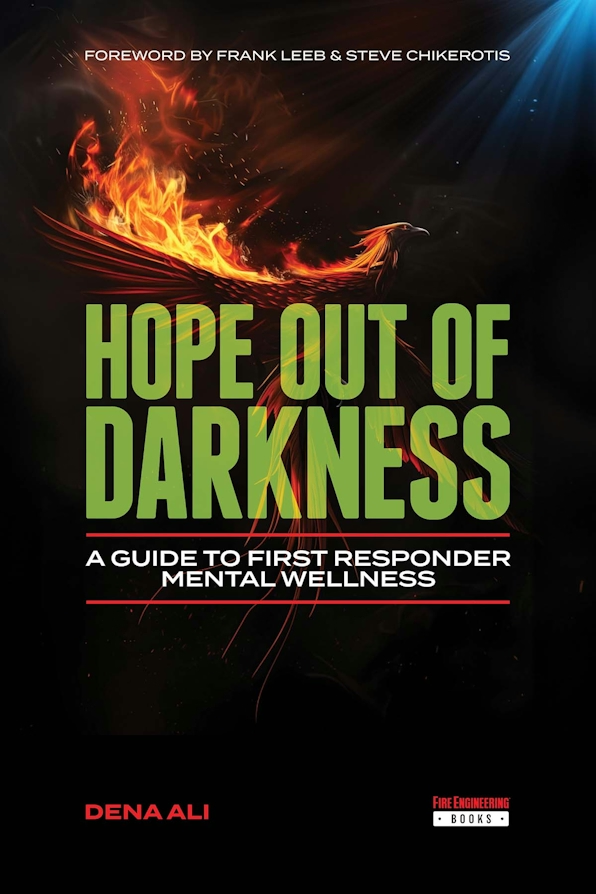
A Guide to First Responder Mental Wellness
Dena Ali
Offers a thorough examination of the mental health challenges faced by first responders, providing practical methods for transforming adversity into wellness. Drawing from her personal experiences, research, and insights from mental health professionals, Dena Ali presents a roadmap for addressing issues such as trauma, organizational stress, and suicide prevention.
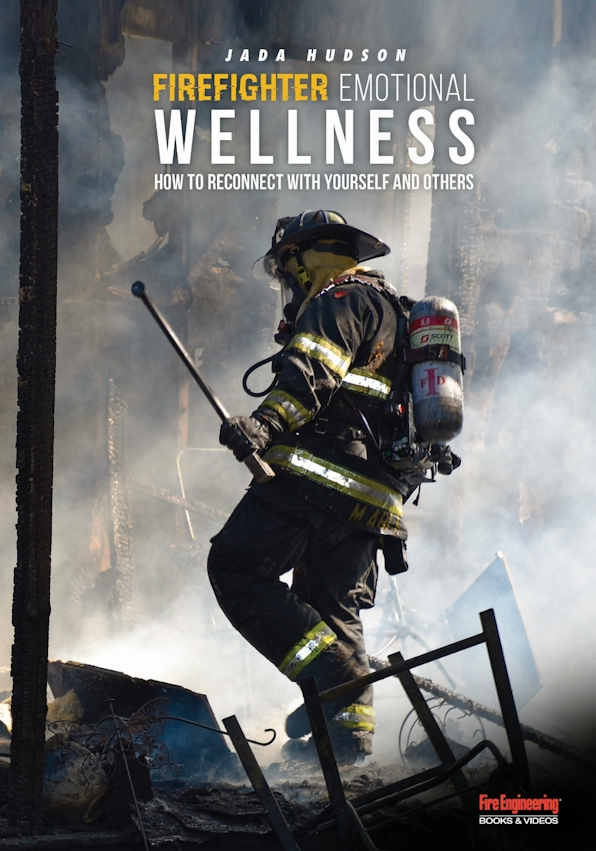
Firefighter Emotional Wellness
How to Reconnect with Yourself and Others
Jada Hudson
A training exercise for your heart and mind. This is an excellent, evidence-based self-help book with boots on the ground sharing interviews with firefighters and how they adapt.
“You are looking at a critical part of your success as a first responder and human being, and it doesn’t mean that you will have perfect understanding right away – or ever, but what it means is you will begin to find tools that help you grapple with what you have seen.” – Jada Hudson
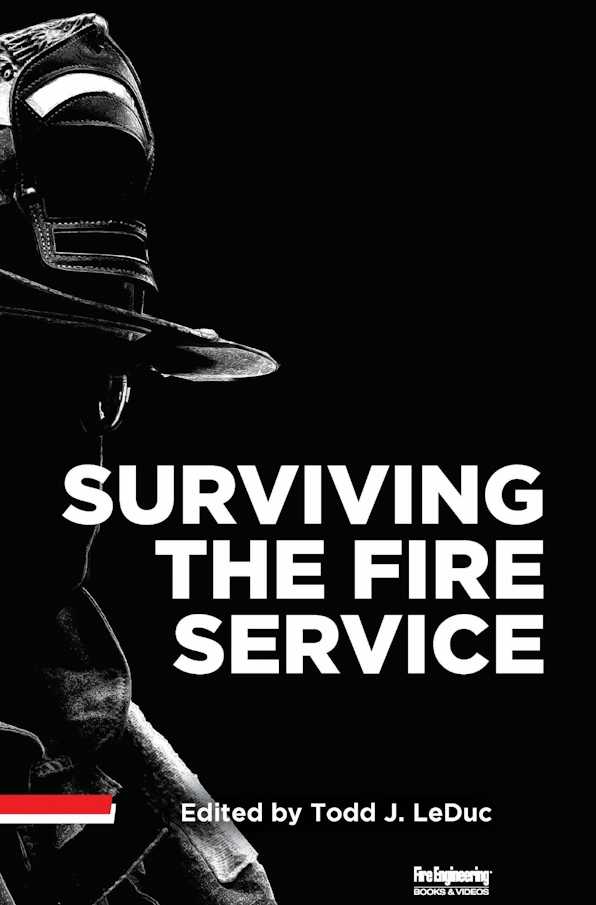
Todd J. LeDuc
Firefighting is an inherently dangerous calling. Firefighters can be exposed to extreme environments from the firehouse to the fireground. Occupational health risks – occupational cancers, cardiovascular events, and behavioral health injuries – continue to be the scourge of the fire service. Surviving the Fire Service contains vital information about cancer, cardiovascular risk, medical exams and screening, nutrition, managing heat stress, women in the fire service, human performance and the tactical athlete and fireground survival. This book addresses how to manage and reduce risks in the fire service and use the tools you need to implement within your fire department to address each of these threats.
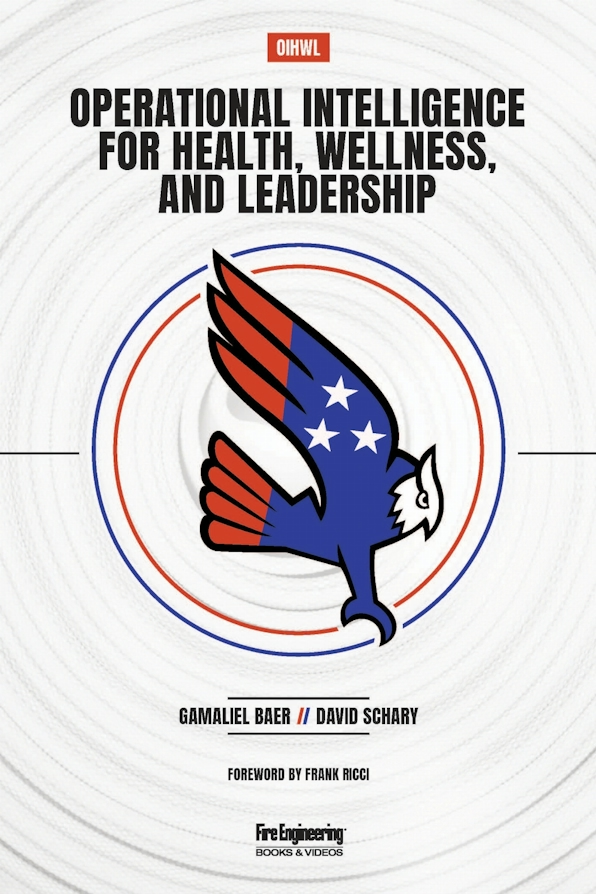
Operational Intelligence for Health, Wellness, and Leadership
Gamaliel Baer and David Schary
Addresses human behaviour and the impact of lifestyle on the Big Three health outcomes of heart attack, cancer, and suicide, weaving together the concepts of resilience, physical wellness, nutritional wellness, mental wellness, and leadership. OIHWL is designed to show the application of the behavioural change model throughout the book. The result is a logically consistent and easy-to-follow framework that any firefighter can apply to their life and that any fire department can adopt and implement as education for its members.
Get 20% off of all Fire Engineering Books this International Firefighters’ Day with code INTFIRE26.